.svg)
.svg)
Navigating turbulent markets with low volatility investing

About the author
IN THIS ARTICLE
Highlights
Why low volatility matters: winning by losing less
Market volatility resurfaced in the first months of 2026, reminding investors that the investment journey can be bumpy and unpredictable. During periods of uncertainty, many investors are tempted to time the market, but missing even a handful of the best-performing days can significantly reduce long-term returns1.
Low-volatility investing seeks to make market fluctuations more manageable, which can help investors remain invested and focused on their long-term objectives. Potential benefits include:
- Reduced volatility: smoother returns may help investors stay disciplined and avoid emotionally driven investment decisions during market downturns.
- Smaller drawdowns: because losses require proportionately larger gains to recover, limiting drawdowns can shorten recovery periods and support long-term compounding. During the Global Financial Crisis, world low-volatility equities experienced a 42% drawdown and recovered in 466 days, compared with a 57% drawdown and a 1,026-day recovery for world equities.2
- Competitive long-term returns: historically, low-volatility strategies have delivered returns comparable to broader market indices while experiencing lower volatility. Investing in the S&P 500 Low Volatility Index achieved a return of 9.5% with a standard deviation of 17.52%, compared to the S&P 500 Index's 10.41% return and 23.01% standard deviation over a 30-year period.3
- Strategic portfolio allocation: low-volatility exposure can help reduce overall portfolio risk while maintaining equity participation, making it a potential core allocation for investors seeking improved risk-adjusted outcomes.
1 Low volatility: Helping investors stay invested. Mackenzie Investments.
2 Morningstar. As of December 31, 2023. Indices used: MSCI ACWI GR USD and MSCI ACWI Minimum Volatility GR USD.
3 Morningstar. S&P 500 TR Index. June 1, 1996 – May 31, 2026.
Value of $100,000 invested in S&P 500 over the last 30 years
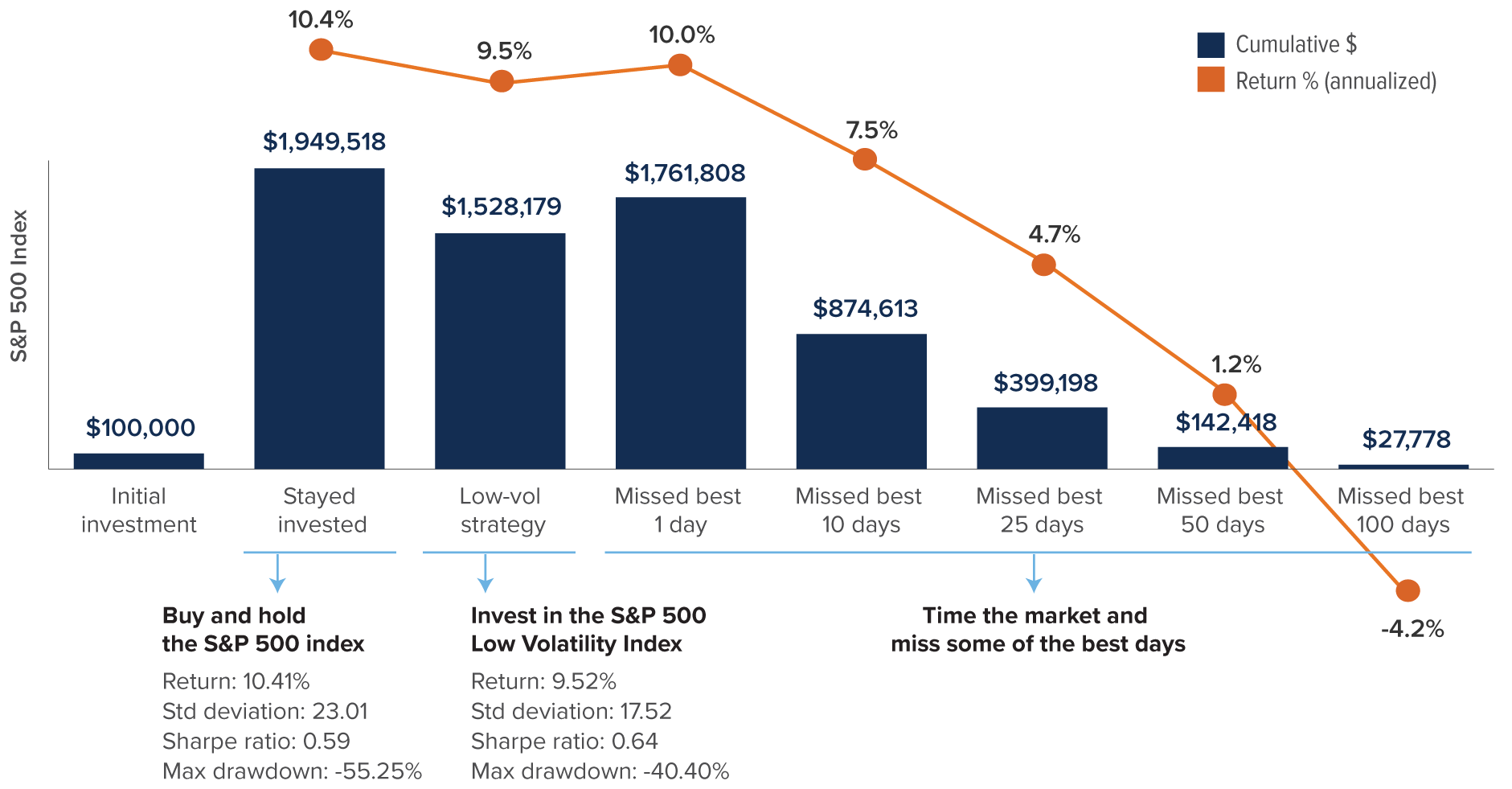
Source: Morningstar. S&P 500 TR Index from June 1, 1996 – May 31, 2026.
The Mackenzie GQE approach to low volatility investing
Mackenzie GQE Low Volatility ETFs (MWLV, MCLV and MULV) are actively managed by the Mackenzie Global Quantitative Equity (GQE) Team, which uses a disciplined investment process designed to outperform their benchmarks over a market cycle while seeking lower volatility and reduced drawdowns.
The investment process combines proprietary quantitative research with active portfolio construction4:
- A broad universe of large- and mid-cap companies is built using proprietary data.
- Companies are selected using bottom-up, region- and sector-relative proprietary factors that identify businesses with attractive fundamentals and growth characteristics.
- Portfolios are optimized to maximize expected returns while managing exposure to sector, country, market-cap and style risks.
- The portfolios are actively managed and rebalanced, combining systematic discipline with investment oversight.
4 Unlocking Low Volatility Strategies. Mackenzie Investments.
A differentiated low-volatility strategy
Traditional low-volatility strategies often rely heavily on historical measures of risk and can result in concentrated sector exposures.
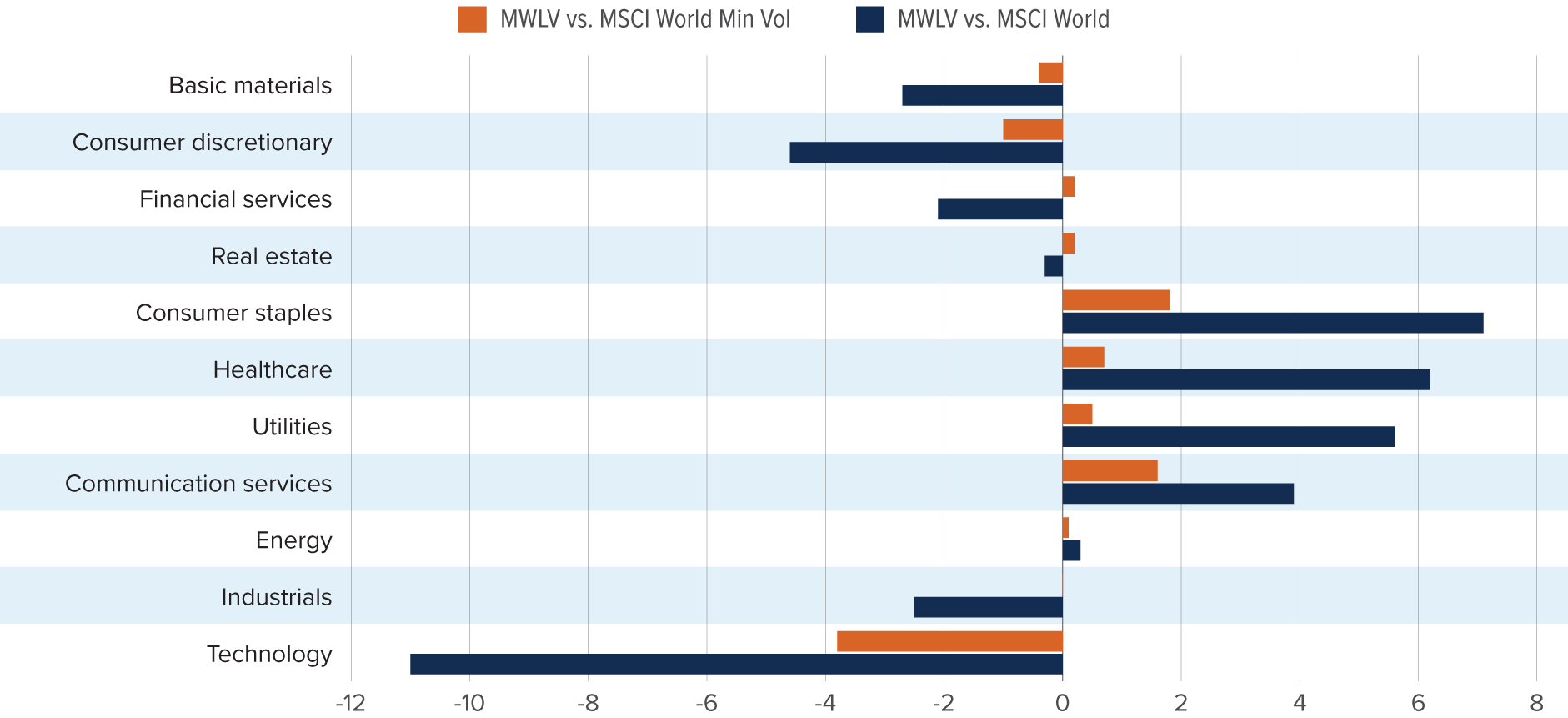
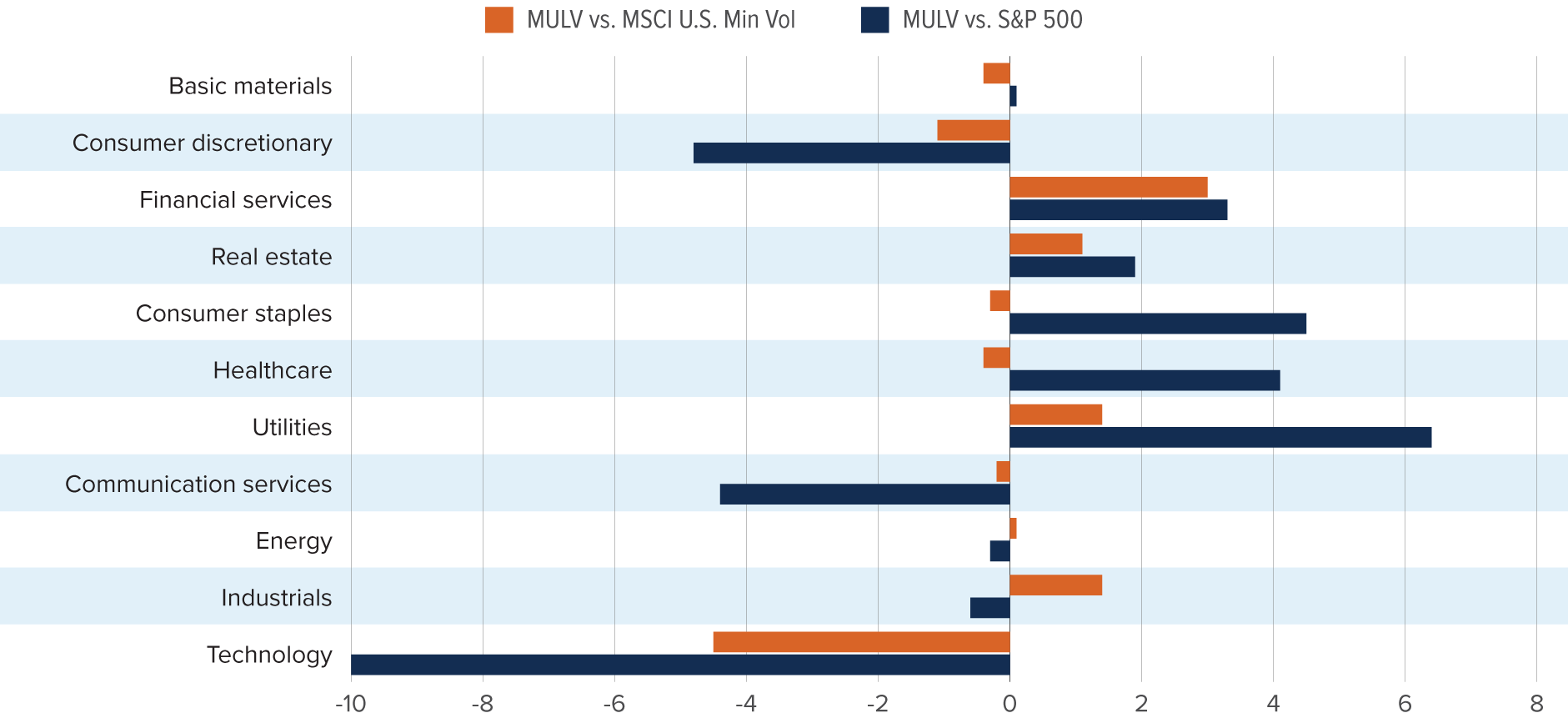
The Mackenzie GQE approach combines proprietary quantitative research with portfolio optimization to build more balanced portfolios. While maintaining a defensive profile through higher exposure to sectors such as Consumer Staples, Utilities and Health Care, the portfolios also seek meaningful participation in rising markets while aiming to reduce overall portfolio volatility.
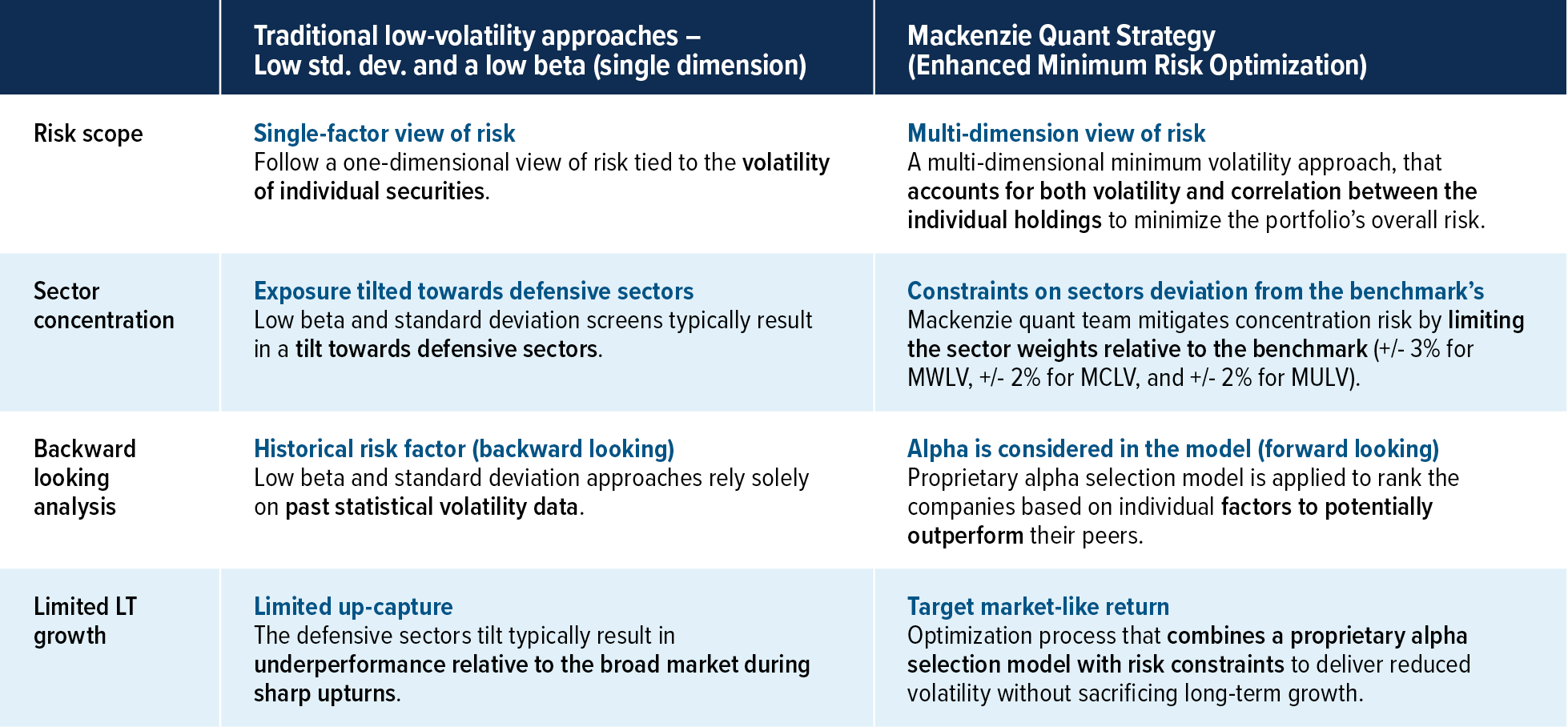
The charts below illustrate how the Mackenzie GQE Low Volatility ETFs compare with traditional minimum-volatility benchmarks and the broad market across sector allocations:
MWLV vs. the benchmark & the broad market - Sector differences
MULV vs. the benchmark & the broad market - Sector differences
MCLV vs. the benchmark & the broad market - Sector differences
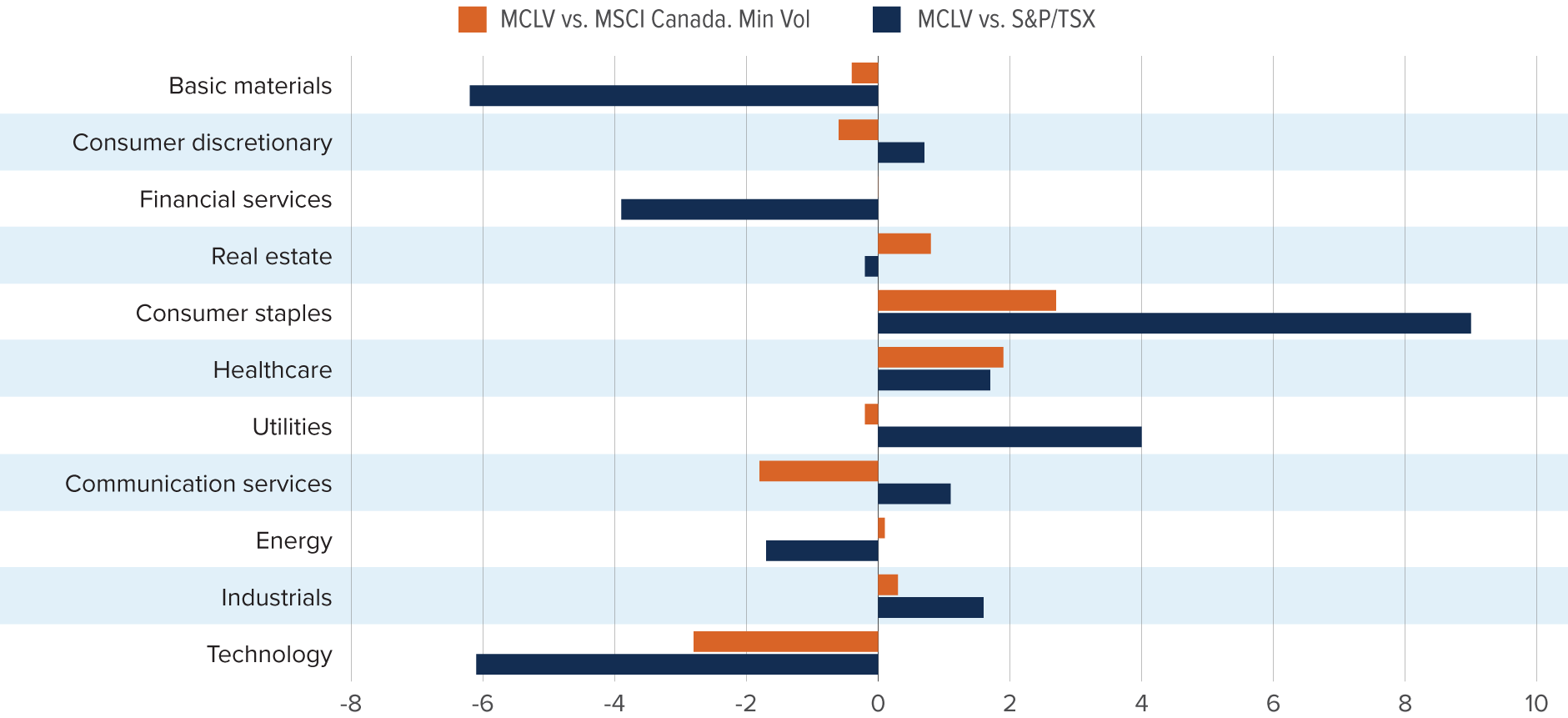
Source: Morningstar, as of June 30, 2026.
Staying invested through market cycles
Periods of uncertainty are inevitable, but maintaining investment discipline is often more important than predicting market movements. Low-volatility strategies can help investors stay invested through market cycles by reducing downside risk while preserving long-term growth potential.
For investors seeking a more resilient equity allocation, the Mackenzie GQE Low Volatility ETF suite offers actively managed solutions across Canadian, US and global equity markets.
ETF Name | Ticker | Management |
MWLV | 0.50% | |
MCLV | 0.45% | |
MULV | 0.45% |
Commissions, management fees, brokerage fees and expenses may all be associated with Exchange Traded Funds. Please read the prospectus before investing. Exchange Traded Funds are not guaranteed, their values change frequently and past performance may not be repeated.
Index performance does not include the impact of fees, commissions and expenses that would be payable by investors in the investment products that seek to track an index.
The content of this article (including facts, views, opinions, recommendations, descriptions of or references to, products or securities) is not to be used or construed as investment advice, as an offer to sell or the solicitation of an offer to buy, or an endorsement, recommendation or sponsorship of any entity or security cited. Although we endeavour to ensure its accuracy and completeness, we assume no responsibility for any reliance upon it.
This article may contain forward-looking information which reflect our or third-party current expectations or forecasts of future events. Forward-looking information is inherently subject to, among other things, risks, uncertainties and assumptions that could cause actual results to differ materially from those expressed herein. These risks, uncertainties and assumptions include, without limitation, general economic, political and market factors, interest and foreign exchange rates, the volatility of equity and capital markets, business competition, technological change, changes in government regulations, changes in tax laws, unexpected judicial or regulatory proceedings and catastrophic events. Please consider these and other factors carefully and not place undue reliance on forward-looking information. The forward-looking information contained herein is current only as of June 30, 2026. There should be no expectation that such information will in all circumstances be updated, supplemented or revised whether as a result of new information, changing circumstances, future events or otherwise.